

Emerging Technologies Revolutionizing Manufacturing
Chosen theme: Emerging Technologies Revolutionizing Manufacturing. From AI to digital twins and 5G, a new toolkit is reshaping how factories design, make, and deliver. Ready to explore what’s working on real shop floors and share your own breakthroughs? Subscribe and join the conversation.
AI That Tunes the Line
A Midwest stamping plant added vibration and temperature sensors, then trained a model on six months of labeled data. The AI flagged a bearing anomaly five days before failure, avoiding a weekend rush repair and saving an entire customer delivery window.
Deep learning cameras learned subtle surface variations that eluded human eyes late in the night shift. False rejects dropped after better lighting and curated datasets, while escapes disappeared. Tell us: which defects are the hardest for your teams to spot consistently?
Reinforcement learning nudged oven temperatures and conveyor speeds within safe bounds, balancing throughput and quality. Paired with a digital twin, the model experimented virtually first, then deployed cautiously. Interested in this approach? Comment with your most finicky process parameter.
Additive Manufacturing Moves Into Production
Rapid tooling and bridge production
A packaging line used printed end-of-arm tooling to cut lead time from six weeks to six days, halving weight and reducing robot wear. Bridge runs kept customers supplied while permanent molds arrived. Share your favorite printed fixture success.

Design for additive, not just print-to-CAD
Topology optimization and lattice structures delivered strength with minimal material. Engineers co-simulated heat and flow to avoid warping, then validated with in-situ monitoring. Training designers to think additively proved as vital as the printers themselves.

A continuous digital thread from design to service
A turbine manufacturer connected CAD, MES, and field telemetry so the twin aged alongside the product. When a supplier changed tolerances, simulation exposed a resonance risk days, not months, later. Comment if your engineering and operations models still live in silos.
Virtual commissioning that shortens ramp-up
Controls teams debugged PLC logic inside the twin before hardware landed, catching interlocks that once cost midnight hours. On day one, the line hit 92% of target rate. Would your next project benefit from a dry run in simulation?
Scenario planning with AI co-simulation
AI agents stress-tested schedules against machine downtime, absenteeism, and rush orders. Planners saw bottlenecks before they formed and adjusted buffers and staffing. If demand spikes tomorrow, could your digital twin recommend a resilient plan in minutes?
Cobots and Flexible Automation
Human-centered design and safety
Force-limited joints, safe speeds, and clear visual cues built trust on day one. An operator named the cobot “Nova,” and acceptance soared after teams co-created work instructions. Safety is culture plus technology—agree or disagree?
Fast changeovers and redeployable cells
Quick-release grippers, no-code teaching, and modular fixtures shrank changeovers from hours to minutes. When orders shifted, the cell moved too—no electricians required. Tell us how often your product mix forces retooling headaches.
A small shop’s big throughput jump
A family-owned machine shop added a cobot tending two CNCs overnight, tripling spindle utilization without adding headcount. The owner now mentors neighbors considering automation. Want the checklist they used to pick the first task? Subscribe for the template.
AR, Wearables, and the Skilled Workforce
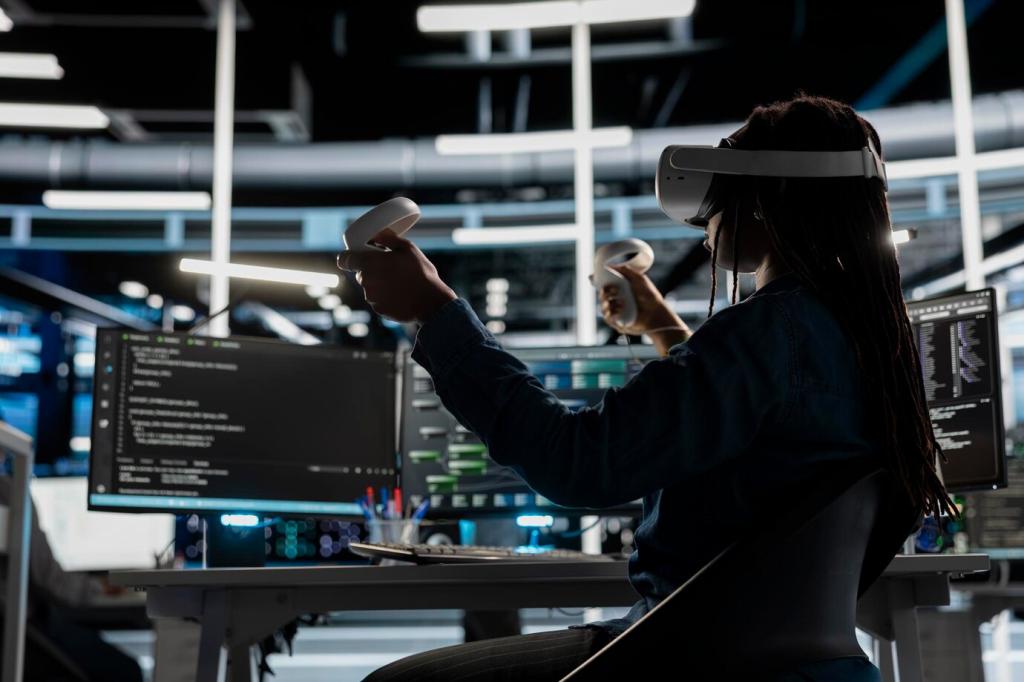
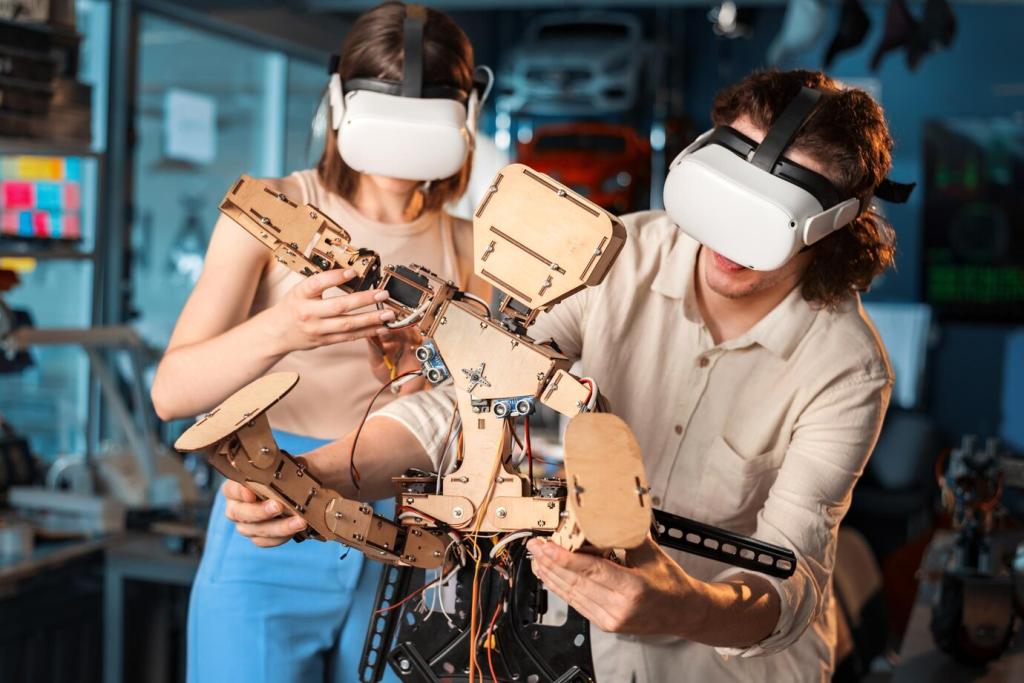
Heads-up overlays highlighted the correct fasteners and torque sequence, reducing rework on a complex assembly. Veterans recorded quick tips—like how to gently seat a stubborn gasket—that saved rookies minutes on every unit. What tip would you record first?
AR, Wearables, and the Skilled Workforce
A technician shared their view with an expert two states away, who drew annotations directly onto the field of view. The machine was back online before lunch—no flights, no hotels. Where could remote help shrink your mean time to repair?
AR, Wearables, and the Skilled Workforce
Microlearning modules tied to real tasks turned downtime into skill-building moments. Badge milestones sparked friendly competition across shifts, while analytics flagged confusing steps. Share your best tactic for keeping procedures fresh and discoverable on the floor.